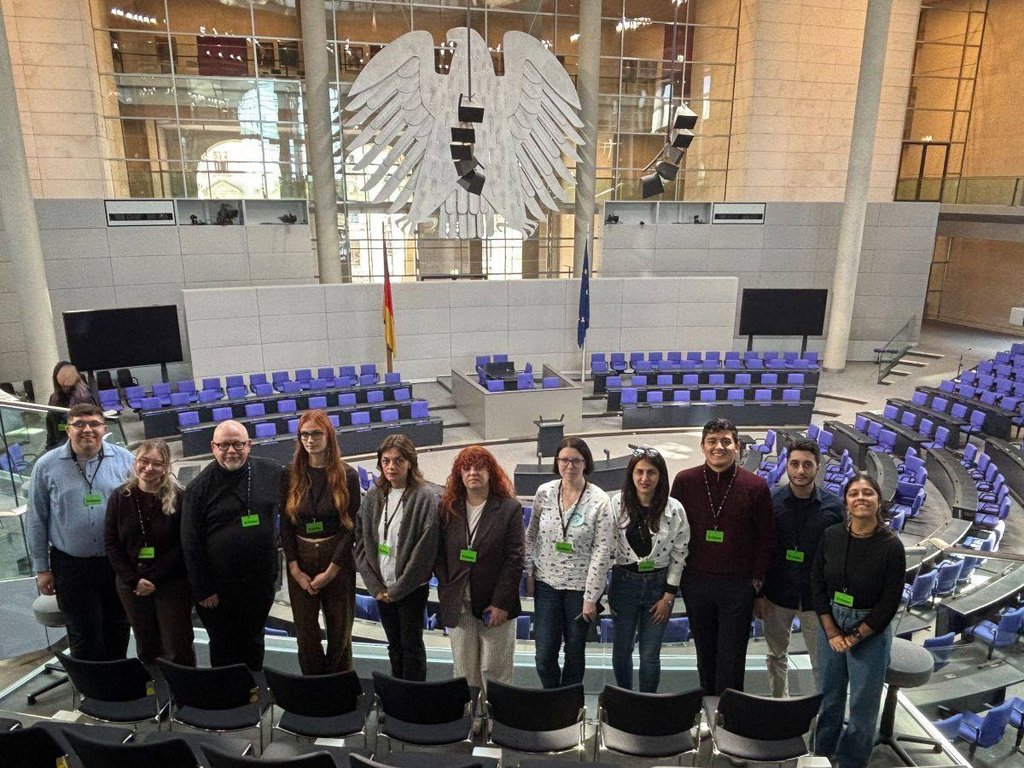
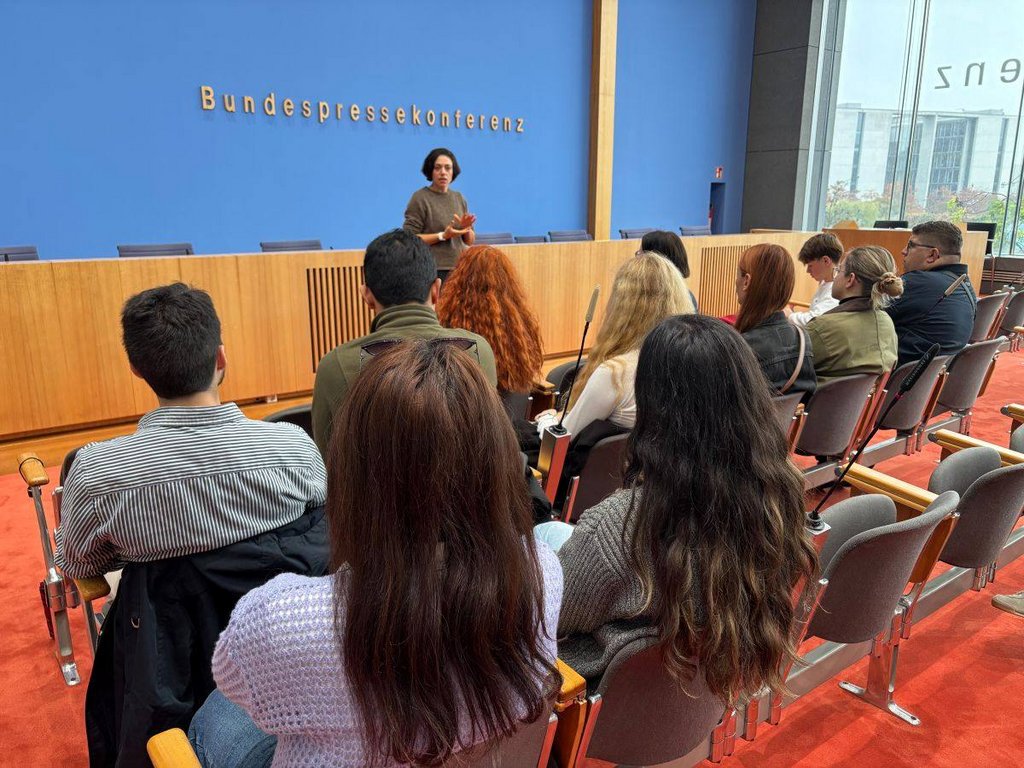
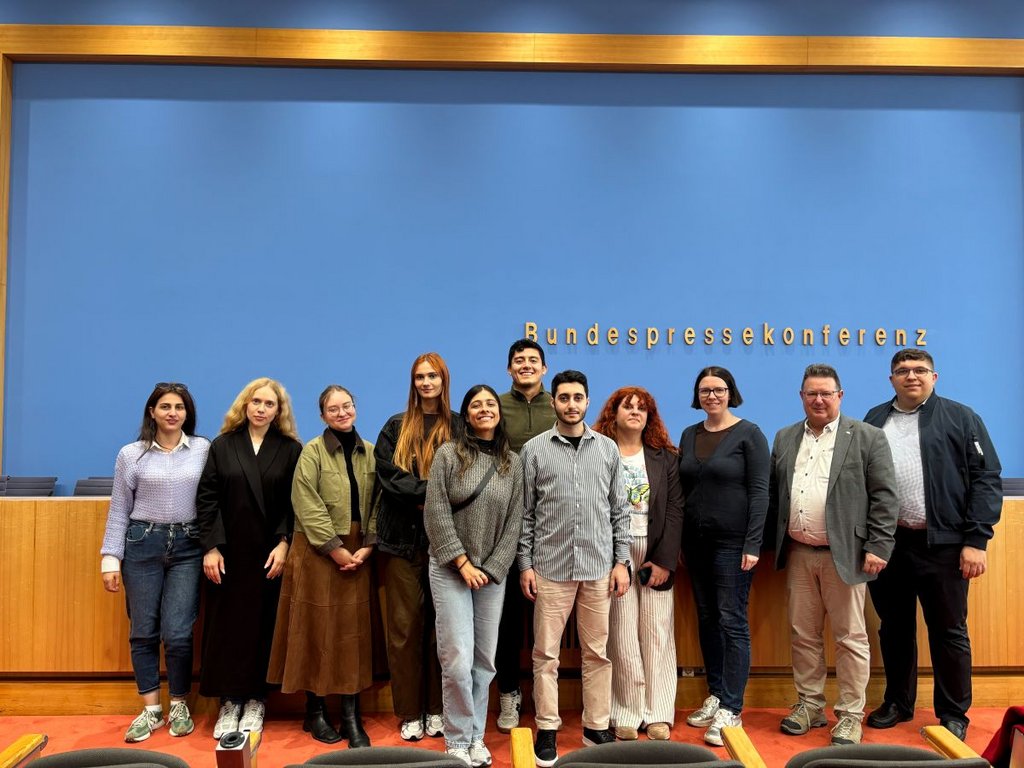
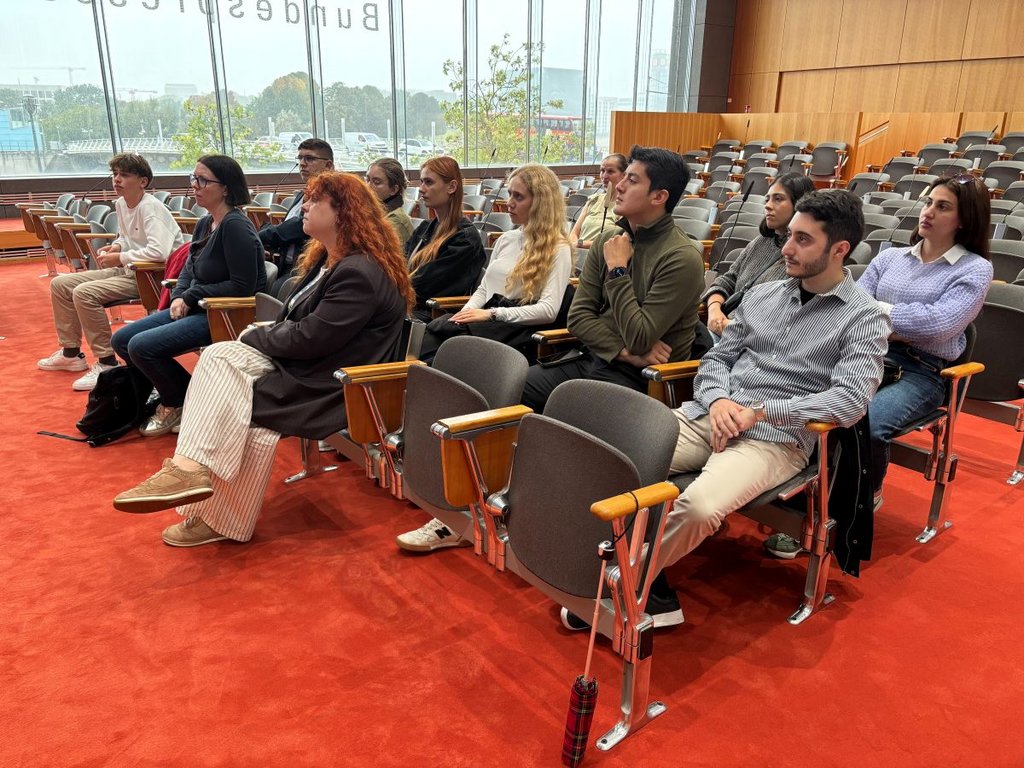
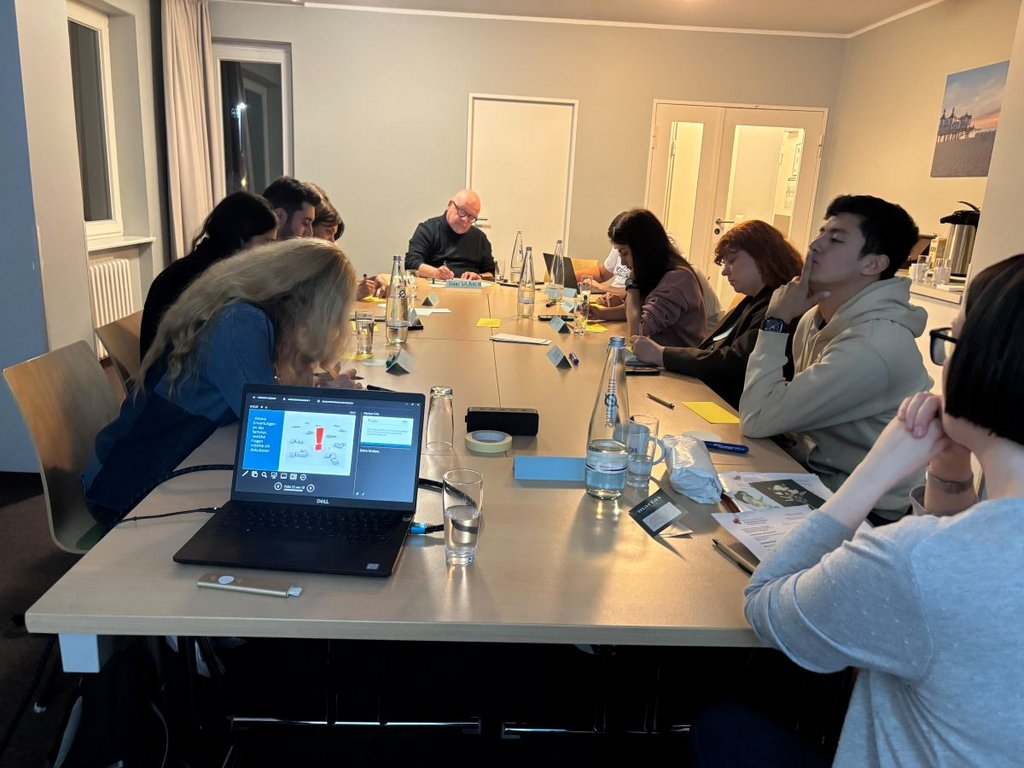
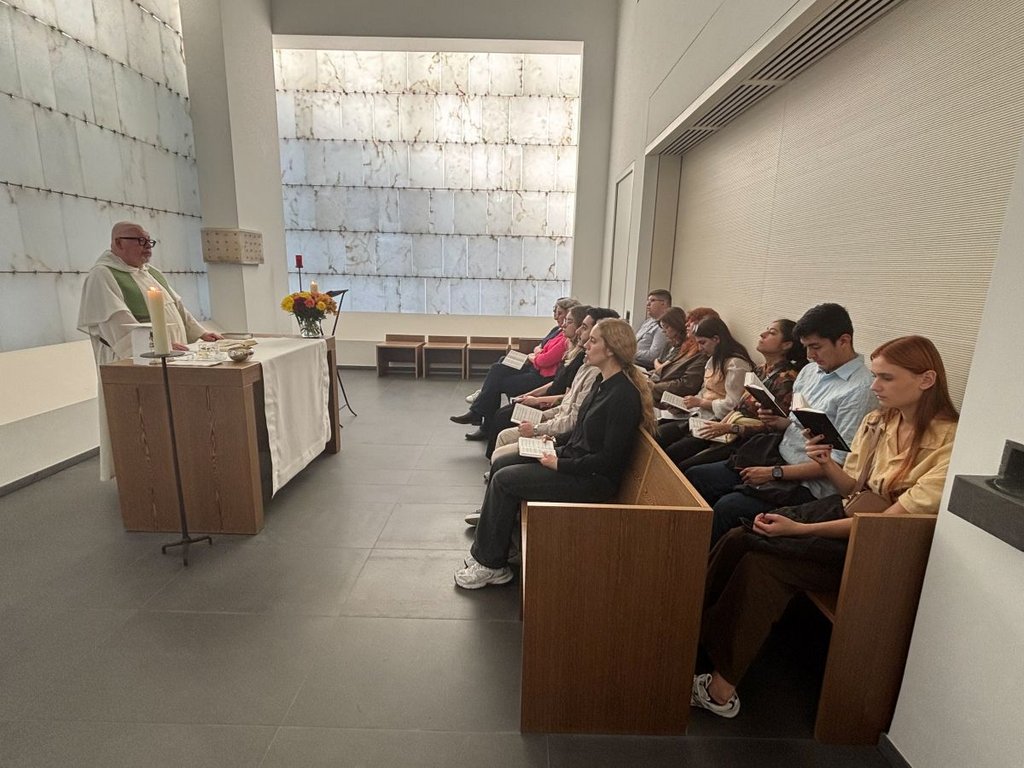
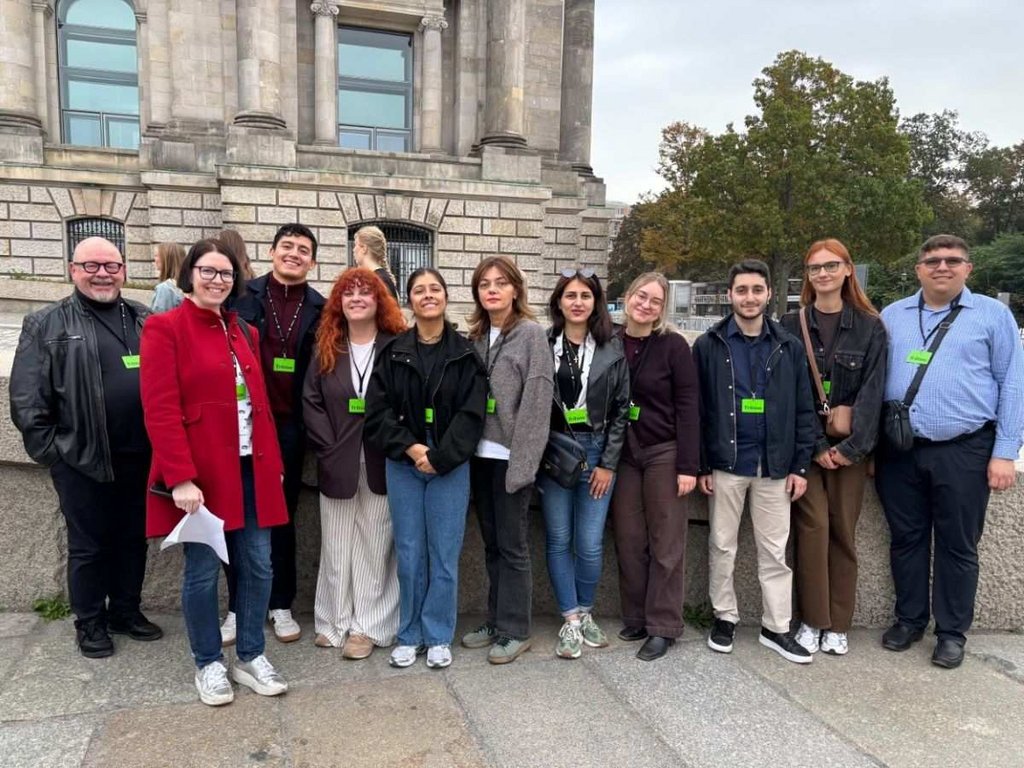
From October 5 to 9, 2026, ten KAAD scholars explored how information is generated, selected, communicated, and critically evaluated under these conditions during the seminar “Media and Politics: Critical Thinking in the Age of Artificial Intelligence” in Berlin. The KAAD organized the seminar in collaboration with the Federal Association of the Catholic Church at Universities. The seminar was led by Antonia Huybrechts from the Federal Association and Markus Leimbach, head of the KAAD’s Department for Central, Southeastern, and Eastern Europe. Spiritual guidance for the seminar was provided by Fr. Prof. Dr. Ulrich Engel, OP.
The ZDF documentary “Backstage heute journal” began by exploring how a news program is produced. The film follows Marietta Slomka, Christian Sievers, and Dunja Hayali – who host the “ZDF-Morgenmagazin” – through a typical workday at the news magazine. In addition to the daily selection of topics, the report covers the preparation of interviews, collaboration with correspondents, and the time pressure leading up to the broadcast. The weekly podcast and communication with viewers and followers are also part of the daily routine described in the film.
From the production of a news magazine, the focus shifted to political reporting from the capital. Katharina Hamberger works as a correspondent at Deutschlandradio’s Berlin studio and reports on political events for Deutschlandfunk’s programs. At the Federal Press Conference’s press center, she spoke with the group about the prerequisites for independent political reporting.
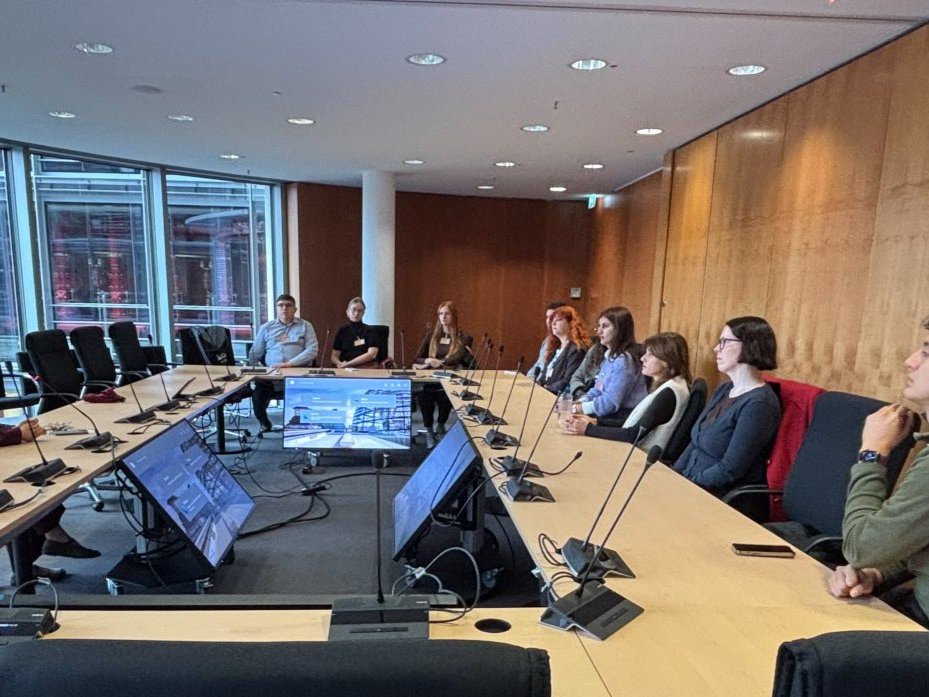
Journalistic analysis requires information about political decisions and the working processes through which they are prepared. An English-language informational presentation in the Reichstag building therefore covered the historical development of the parliament, the building’s architecture, and parliamentary procedures. Under the title “Insights into Everyday Office Life,” Alissa Adler then spoke about her work as a research assistant in Thomas Rachel’s office. The Member of the Bundestag has served as the Federal Government Commissioner for Freedom of Religion and Belief since 2025.
Lisa-Marie Singer presented another area of political work at the Willy Brandt House. On the SPD Party Executive Board, she heads the Department of Policy and Program Development and is also responsible for churches and religious communities. Her presentation therefore led directly to the question of how church representatives communicate their positions to politicians, the media, and the public.
At the Catholic Office, Dr. Natascha Sasserath-Alberti explained the Catholic Church’s political advocacy. The journalistic treatment of church-related topics serves a different purpose: Steffen Zimmermann, Berlin correspondent for katholisch.de, reported on his editorial work under the title “Media and the Church.” Britta Baas, in turn, described communication from the perspective of a church institution. She is the press spokesperson for the Central Committee of German Catholics and heads its Press and Public Relations Department.
Following the discussions on church advocacy and public relations, the program moved on to the social services provided by the Berlin City Mission. The center’s 30,000-square-meter grounds near the main train station are home to 16 facilities serving people in various situations of need. These include an emergency shelter, a clothing bank, a clinic for homeless people, and a transitional housing facility. The services range from providing clothing and medical care to offering social and educational support for people who are homeless or at risk of homelessness. During a guided tour, the participants gained insight into the work being done there. The center also serves as the headquarters of the Berlin City Mission.
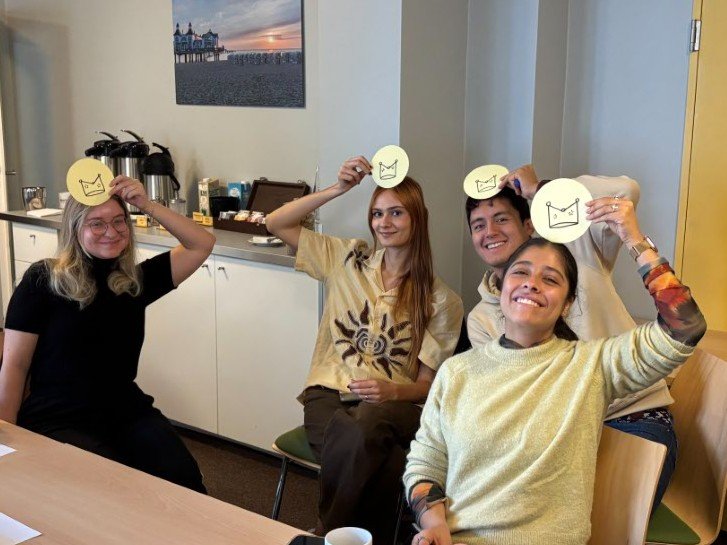
On the final morning, the group revisited the questions raised during the seminar week under the title “AI, Media, and Politics Are (Not) My Thing.” The final reflection focused on their own relationship to artificial intelligence, media, and politics. As researchers, our grant recipients are themselves involved in the creation and dissemination of knowledge. A critical approach to information therefore affects both their own work and their role in societal debates.
KAAD Seminar on “Media and Politics” in cooperation with the Federal Association of the Catholic Church at Universities
|
Aktuelles, Seminare
Journalistic research and editorial processes are changing as a result of the use of artificial intelligence, while social media and new communication strategies are shaping how political actors engage with the public.