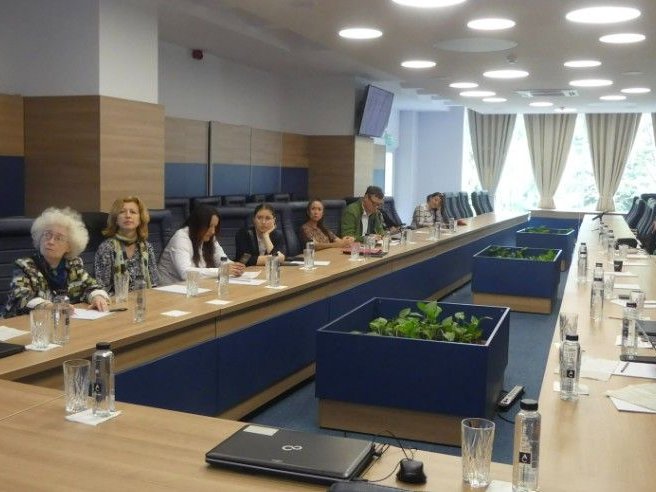
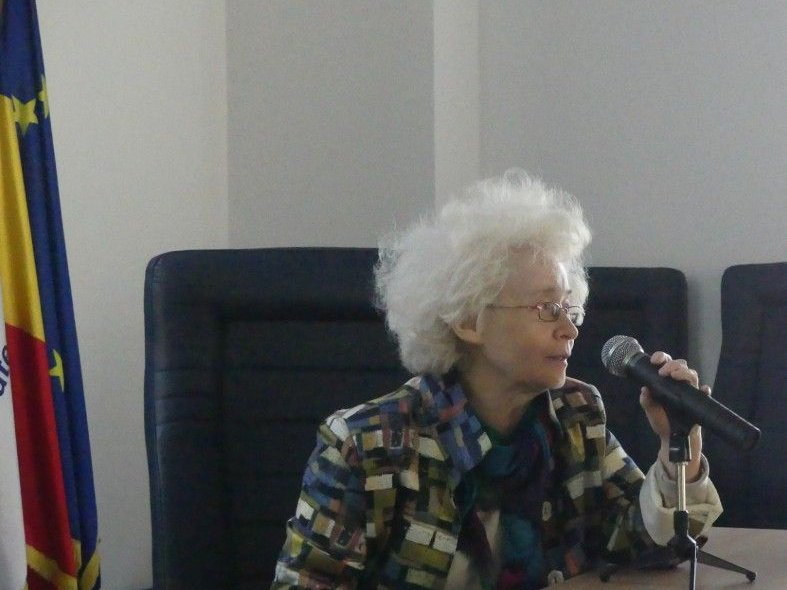
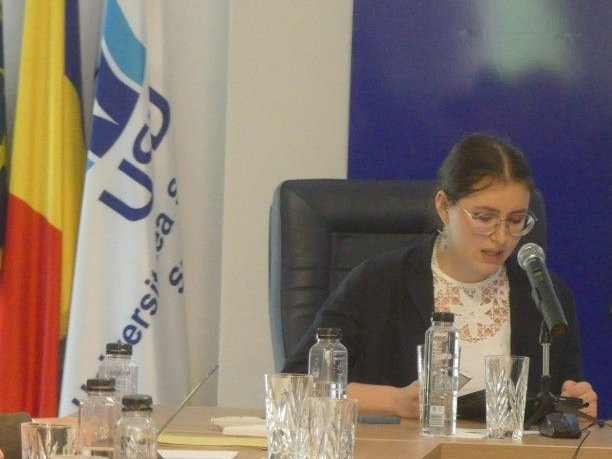
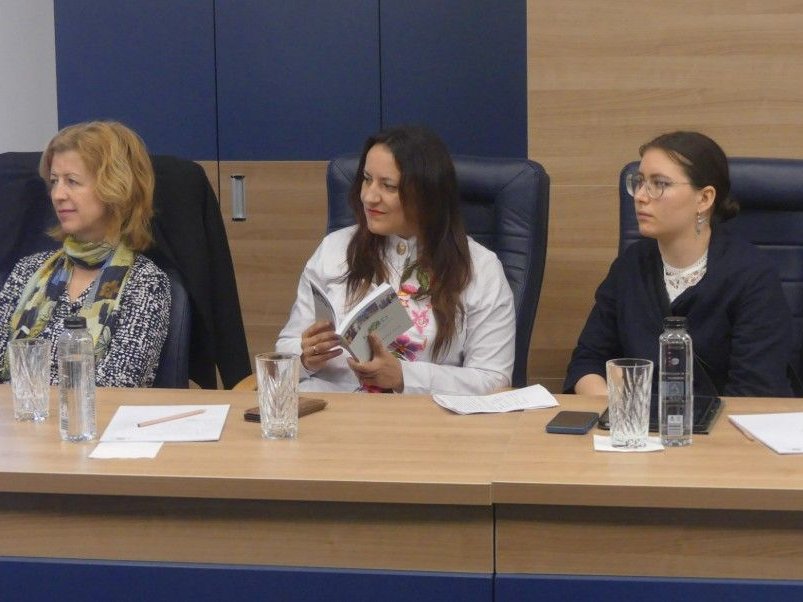
What impact does Russia’s war of aggression against Ukraine have on the European security landscape? This question was the focus of a conference organized by Ukrainian KAAD alumni, which took place from May 28 to 31, 2026, at Stefan cel Mare State University in Suceava, Romania. In addition to alumni from Ukraine, former scholarship recipients from Romania, Poland, Latvia, and the Republic of Moldova also participated. The conference was supported by Division Head Markus Leimbach and Program Officer Alwin Becker from KAAD’s Central, Southeastern, and Eastern Europe Division. At the start, Markus Leimbach and Dr Aurelian Rotaru, Vice Rector for Academic Affairs at the University of Suceava, delivered welcoming remarks to the participants.
The conference presentations addressed the religious, political, cultural, and social dimensions of the war, as well as their significance for the European security landscape.
The conference opened with a presentation by Professor Iveta Leitane, ascholar of Jewish studies. Drawing on her research into the Russian Orthodox Church in the context of the war in Ukraine, she presented ten theses on how the war has transformed religious thought. In particular, she addressed the stance of the Russian Orthodox Church under Patriarch Kirill. She also placed this development in a historical context, pointing to the relationship between the Church and state power in Russia that has evolved over generations. Professor Gheorghe-Ilie Fârte, a cultural studies scholar at the University of Iași, Romania, addressed issues of political communication. In his presentation, he examined how communicative constructions can shape the European security landscape. The focus was on the concept of securitization, which describes how political actors portray issues as existential threats and thereby legitimize extraordinary measures. Using Russian propaganda as an example, he demonstrated how threat scenarios are constructed and used to justify the war against Ukraine. In conclusion, he discussed ways to counter disinformation, citing historical examples of state information policy.
The cultural philosopher Professor Cezary Kościelniak (Poznań) turned his attention to the period following the current conflicts. Drawing on statements by Popes John Paul II and Leo XIV, he advocated for closer cooperation between secular and religious cultures. A stable Europe can only succeed in the long term if both sides remain in dialogue and actively help shape post-war social relations.
Ukrainian literary scholar Natalia Blum-Barth examined the portrayal of the war in Ukrainian literature and its reception abroad. She demonstrated how Russia’s war of aggression has given rise to new forms of literary expression and how Ukrainian literature is received in German-speaking countries. In doing so, she also addressed the question of which voices are heard in the international literary scene and what challenges this poses for the reception of Ukrainian literature.
Maria Shevchenko, a master’s student at the Ukrainian Free University in Munich, concluded the session by addressing the destruction and preservation of cultural heritage in Ukraine. Using various examples, she presented initiatives that document and preserve cultural heritage, including virtual databases in which buildings, paintings, and other cultural assets are digitally recorded. Initiatives and the engagement of civil society play an important role in the preservation and documentation of endangered cultural heritage. Her presentation also highlighted the extent of the damage caused by the war to tangible and intangible cultural heritage.
The day concluded with a small-group discussion in the “World Café” format with the speakers in attendance.
In addition to the conference, participants visited the Romanian Orthodox monasteries of Sucevița and Voroneț in Bukovina—both UNESCO World Heritage Sites—as well as Yuriy Fedkovych University in Chernivtsi in southwestern Ukraine. Serhij Lukanjuk, chair of the Ukrainian alumni association and director of the university’s International Office, guided the group through the university building and provided insights into the institution’s history.
The conference offered participants the opportunity for academic exchange and personal interaction. It also exemplifies KAAD’s international networking efforts, which facilitate dialogue, exchange, and trust-building even in politically challenging times.
KAAD Alumni Conference in Suceava, Romania
|
Osteuropa, Alumni, Aktuelles, Seminare
“The Architecture of the European Security Area: Ukraine’s Experiences and New Risks”