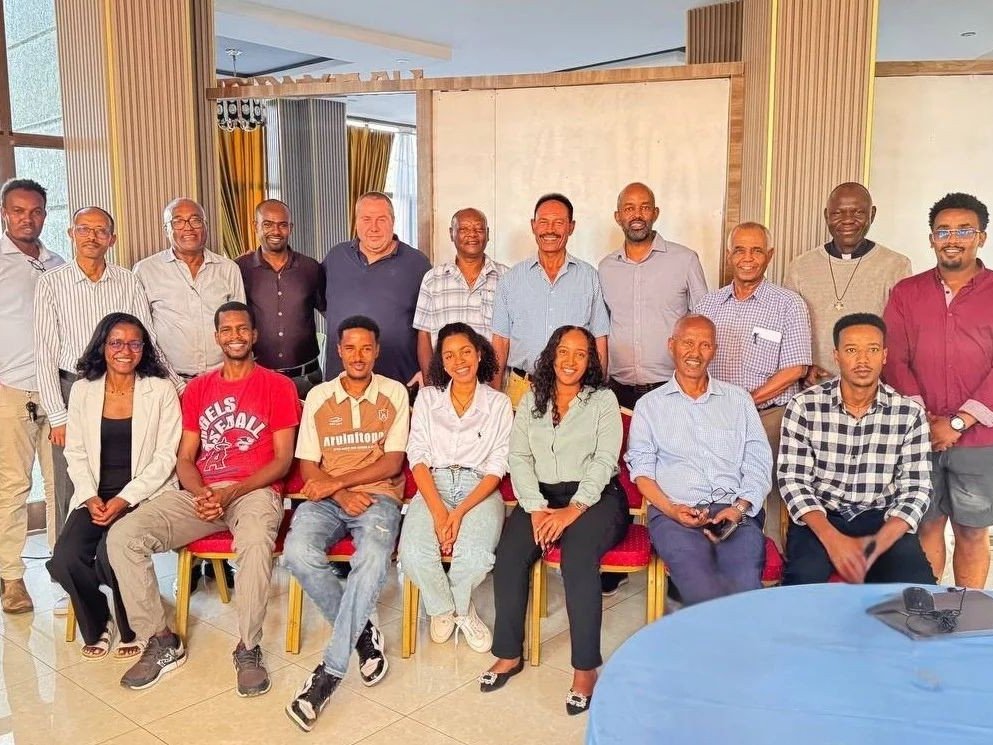
The alumni association “KAAD Association of Scholars from the Horn of Africa” (KASHA) organizes an annual seminar in Ethiopia on a current topic. From June 18 to 21, 2026, 19 current and former KAAD scholars gathered at Arba Minch University in the southern part of the country. The seminar was titled “Faith Meets Technology: Religious and Scientific Perspectives on Artificial Intelligence and Its Uses.”
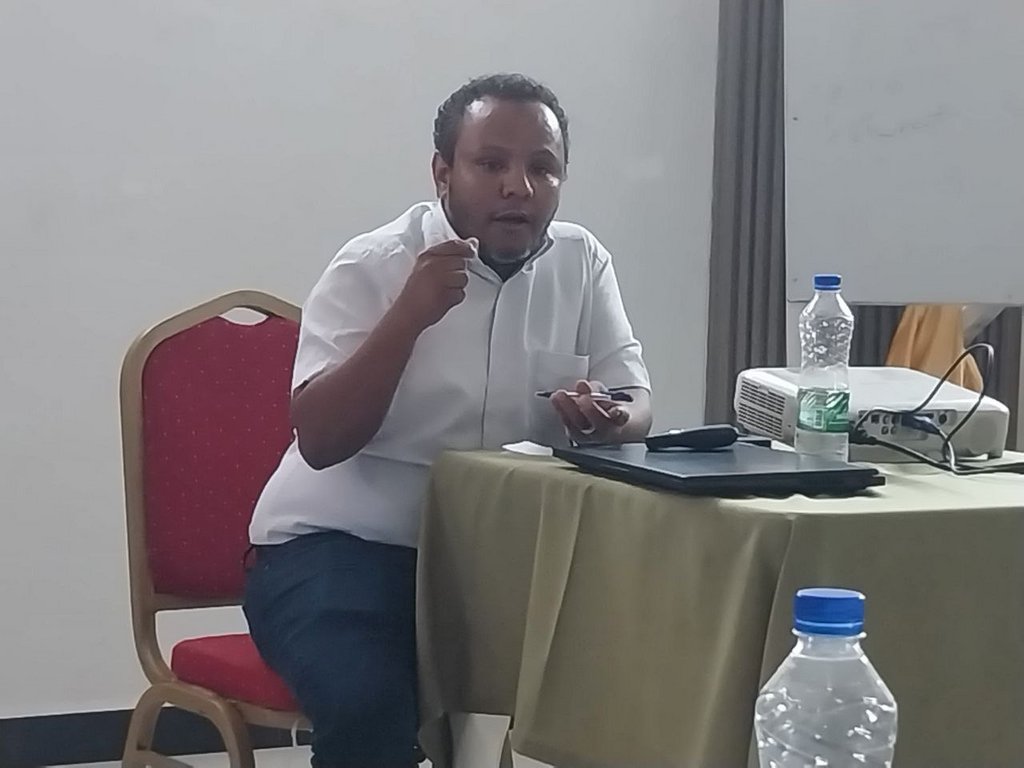
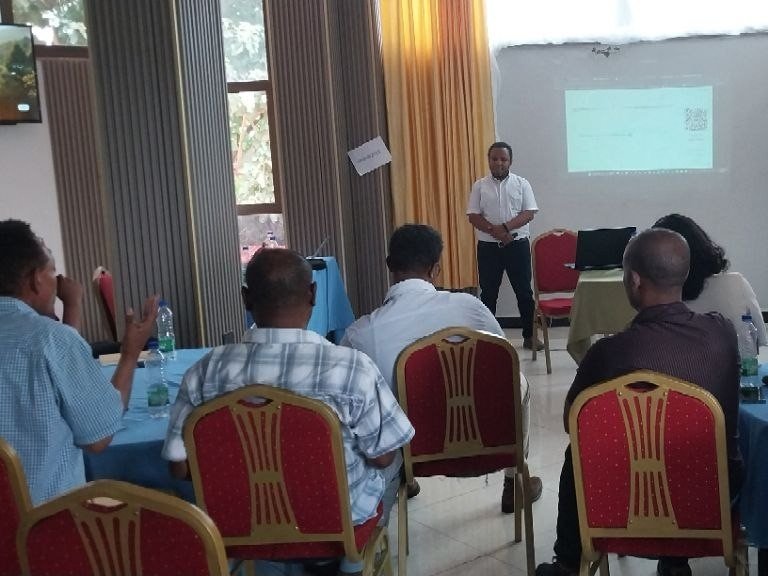
The seminar began with an introduction to the technical fundamentals of AI by Dr. Mohammed Abebe of Arba Minch University. He traced the development from generative AI to today’s agent-based AI systems, which are increasingly capable of planning and executing tasks autonomously. While generative AI creates content such as text, images, program code, or music, agent-based systems can also use tools and perform actions to achieve specified goals.
KAAD alumna Bezawit Assefa explained the Church’s perspective on the use of AI. She is a software developer and heads the Office for Communication, Public Relations, and IT at the Catholic Bishops’ Conference of Ethiopia. Drawing on Pope Leo XIV’s encyclical “Magnifica humanitas,” she spoke about AI as a tool for science and progress, as well as issues of human dignity, social justice, and the regulation of new technologies. In doing so, she also addressed the Pope’s warnings against the concentration of power, the reduction of human beings to data, and the use of autonomous weapons systems. She explained the call for international cooperation and regulation that specifically protects vulnerable people. At the same time, she addressed the risk of replacing human conscience, moral judgment, and empathy with technical systems.
Following this, the participants discussed in a plenary session the role AI already plays today in their academic, professional, and personal lives. The discussion also focused on what additional tasks AI could take on in the future and how it can be designed as a tool for humanity. In working groups, they explored these questions in greater depth and shared their own experiences with AI.
The seminar was complemented by presentations from two KAAD alumni, who introduced their research at the host institution, Arba Minch University. Prof. Kumelachew Yeshitela discussed his research on ecosystem services and biodiversity conservation, while Prof. Brook Lemma spoke about the lakes of the East African Rift Valley and the relationship between precipitation patterns, groundwater systems, and climate change. Arba Minch is located between Lake Abaya and Lake Chamo. The city’s name means “Forty Springs” in Amharic and refers to the natural springs that supply the city and its surroundings with drinking water.
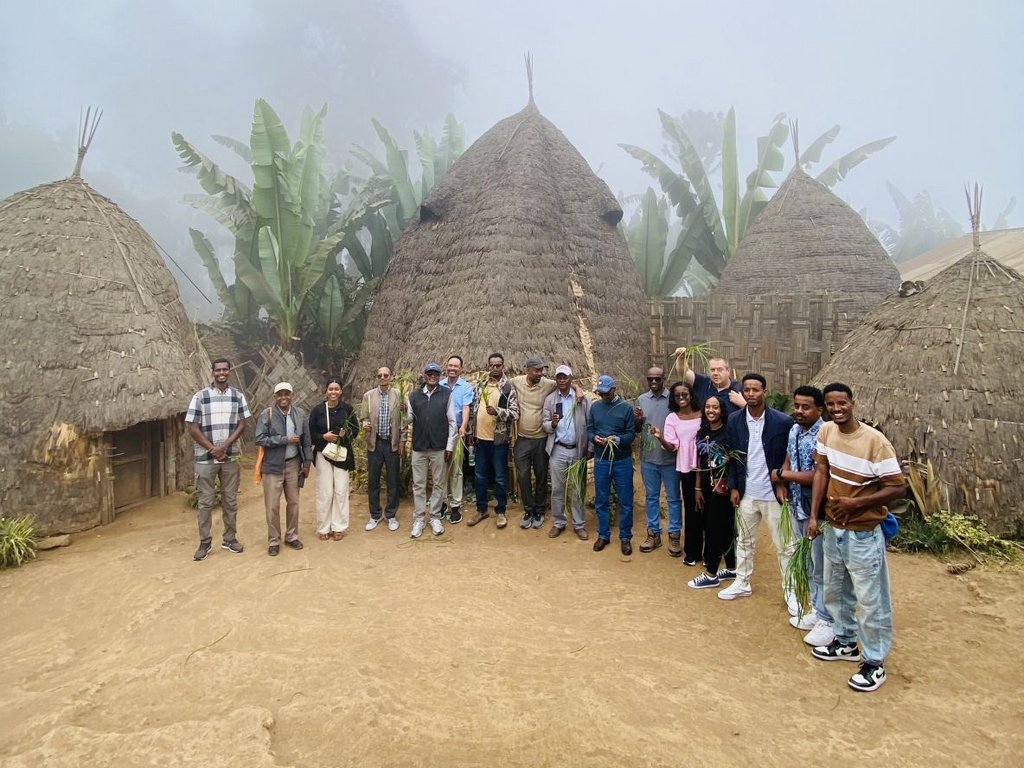
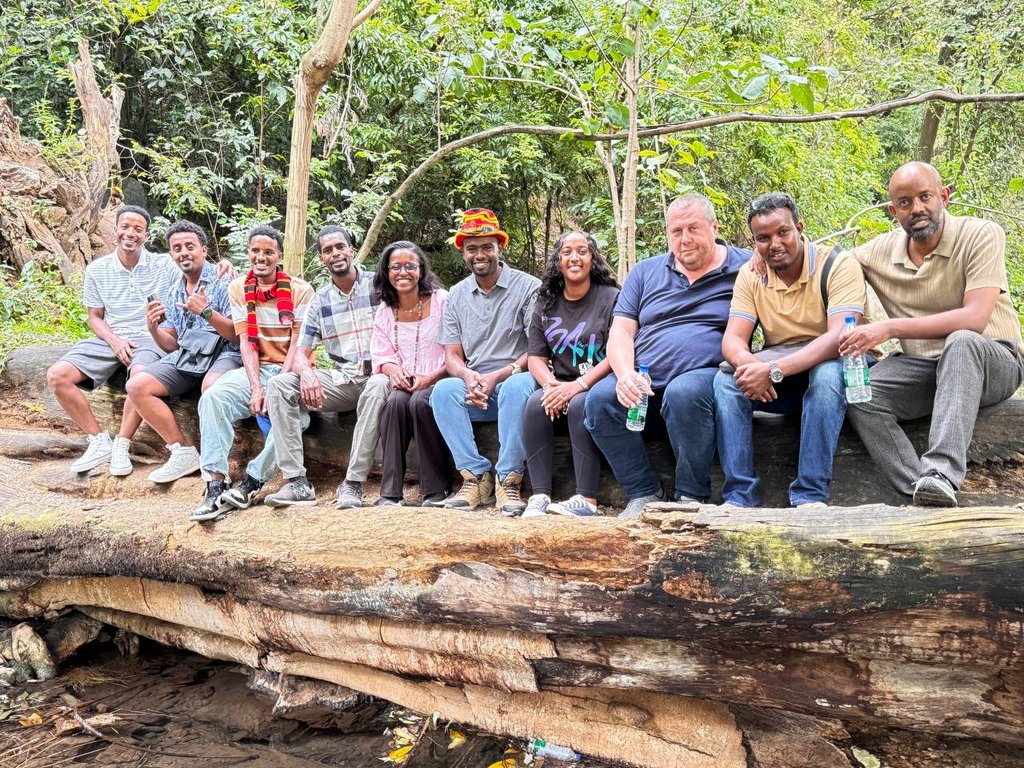
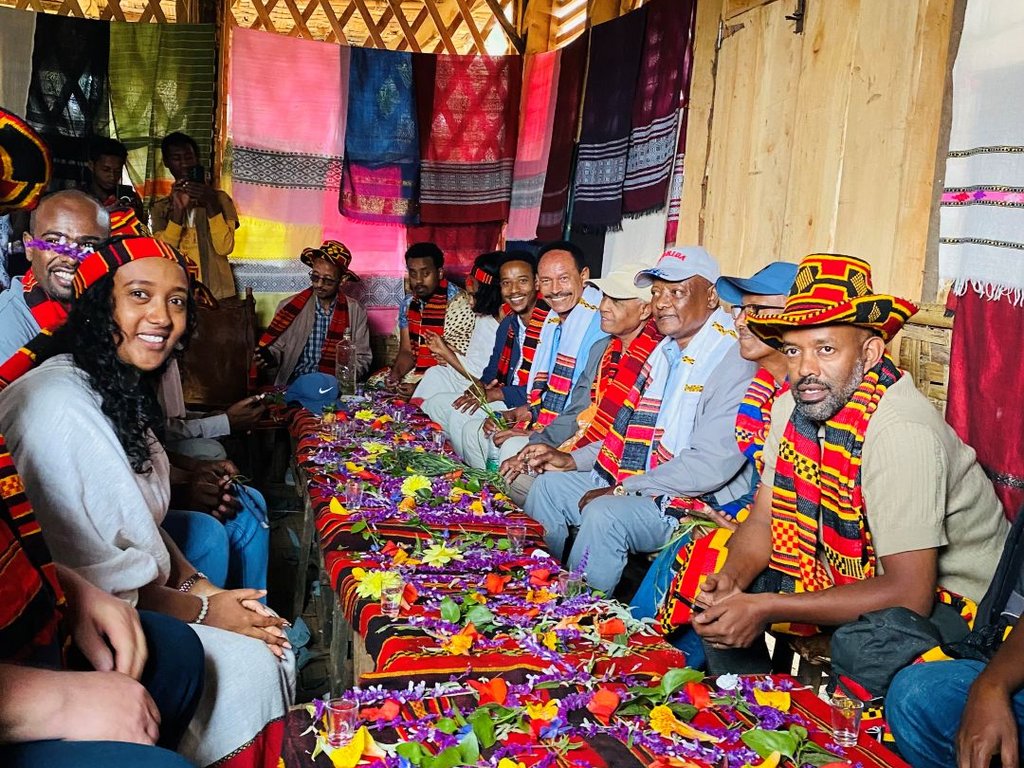
On the second day of the seminar, participants had the opportunity to explore some of these topics firsthand. They visited a Dorze ecotourism project, where they gained insights into traditional weaving and the construction of characteristic bamboo houses. The visit included demonstrations of cotton processing as well as traditional music and dances. The group also sampled kocho, a food made from the ensete plant. Another excursion took the group to the forested headwaters of Arba Minch. During a guided hike, the scientific experts in the group explained the local ecological relationships. The day concluded with a joint Mass at the city’s Catholic parish, hosted by the Spiritans.
The seminar was organized by KAADalumni Dr. Ephrem Tekle Yacob and Tsegaye Yoseph, as well as the KASHA coordination team, and was accompanied by the head of KAAD’s Africa Department, Dr. Marko Kuhn.
KAAD Alumni Seminar in Ethiopia: Artificial Intelligence from a Scientific and Ecclesiastical Perspective
|
Afrika, Aktuelles, Seminare
Current and former KAAD scholarrs discussed how people use AI, what tasks they assign to it, and where human judgment remains indispensable at the KASHA seminar in Arba Minch. The discussion focused on scientific applications and the Church’s positions on the responsible use of AI.